
President Donald Trump signed a proclamation on Wednesday to allow 300,000 tons of lean beef trimmings to be imported into the United States over 90 days without tariffs. The move, intended to help rebuild the nation’s cattle herd and lower prices, has prompted strong pushback from Georgia cattle producers and state agriculture leaders who argue it could undermine domestic efforts to strengthen the industry.
In a statement on social media, President Trump indicated that this imported beef "will be sold at 25 percent below current market prices," aiming to reduce costs for consumers and create "space for our Great American Beef Herd to grow again." Lean beef trimmings are described as smaller pieces of lean meat separated from larger fat pieces after steaks and roasts are cut.
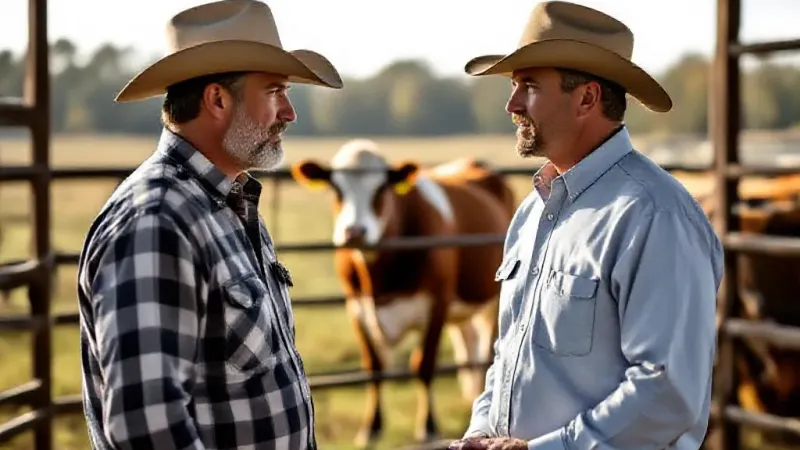
However, representatives of Georgia’s cattle producers quickly criticized the plan, asserting it would undercut American ranchers and impede the process of rebuilding the national herd. Kelley Owen, executive vice president of the Georgia Cattlemen’s Association, stated that producers require confidence in a fair market for their cattle if they invest in herd expansion, improved genetics, pastures, equipment, and infrastructure. She added that bolstering American cattle producers' confidence is the best way to increase the nation's beef supply.
Georgia Agriculture Commissioner Tyler Harper, a Republican, publicly disagreed with President Trump's initiative. In a social media statement, Harper indicated that increasing reliance on imported food does not provide a sustainable solution to affordability concerns for Americans. He emphasized the importance of lowering costs for consumers while simultaneously supporting domestic farmers and ranchers, stating that a robust domestic food supply is crucial for both economic and national security.
The federal beef plan has also become a point of contention in Georgia’s gubernatorial race. Former Atlanta Mayor Keisha Lance Bottoms, the Democratic candidate for governor, voiced her opposition to the plan, expressing solidarity with Georgia's cattle producers. Bottoms stated that these producers are vital to the state's agriculture economy and food supply. She also challenged Rick Jackson, the Republican nominee for governor, to join her in a bipartisan stance against what she characterized as a damaging policy, asserting that Jackson had not stood up to Trump on the issue.
In response, Garrison Douglas, a spokesman for Rick Jackson’s campaign, characterized Bottoms' remarks as "empty campaign rhetoric." Douglas clarified that governors do not set federal policy but can support Georgians impacted by decisions made in Washington D.C., which he said is Jackson's focus. Douglas did not directly address Jackson’s position on the federal import plan but outlined Jackson’s platform for Georgia cattlemen, which includes efforts to increase processing capacity and biosecurity, reduce input costs, and lower property taxes. Douglas further claimed that Jackson "will deliver more than statements, he’ll deliver action," in contrast to Bottoms.
The White House plan comes as the U.S. cattle herd, encompassing both beef and dairy cows, has reached its lowest point since the 1950s, according to data from the U.S. Department of Agriculture. Ranchers attribute this decline to various factors, including persistent droughts, rising operational costs such as diesel fuel and machinery, and overall market risks, which make expanding their herds an uncertain prospect.
Consumers have also faced rising beef prices. According to data from the U.S. Bureau of Labor Statistics, a pound of ground beef cost the average grill master approximately $6.89 last month. This figure represents an increase from $6.25 in July 2025 and $4.39 in July 2021.