
Atlanta and federal courts have seen recent decisions impacting voter privacy and election procedures for Georgia residents. A federal judge this week dismissed a U.S. Department of Justice lawsuit that sought extensive personal information about registered Georgia voters. Separately, the State Election Board met Thursday, October 1, 2026, and opted against pursuing a proposed emergency rule intended to bolster ballot secrecy and address a known vulnerability in the state's voting system. These developments directly concern how voter information is handled and how ballots are processed, matters important to every person who casts a vote in Valdosta, Lowndes County, and across South Georgia.
U.S. District Judge Victoria Marie Calvert of the Northern District of Georgia ruled Wednesday, September 30, 2026, to dismiss a lawsuit filed by the Trump administration's Department of Justice. The lawsuit aimed to obtain unredacted voter records from Georgia, which include sensitive data such as birth dates, driver’s license numbers, and Social Security numbers, in addition to publicly available voter names. The federal government sought this information to cross-reference with databases to determine voter eligibility, potentially including immigration status. Judge Calvert determined that Congress did not intend for the federal laws cited by the Justice Department to override existing state voter privacy laws, thus upholding the state's protections for this data.
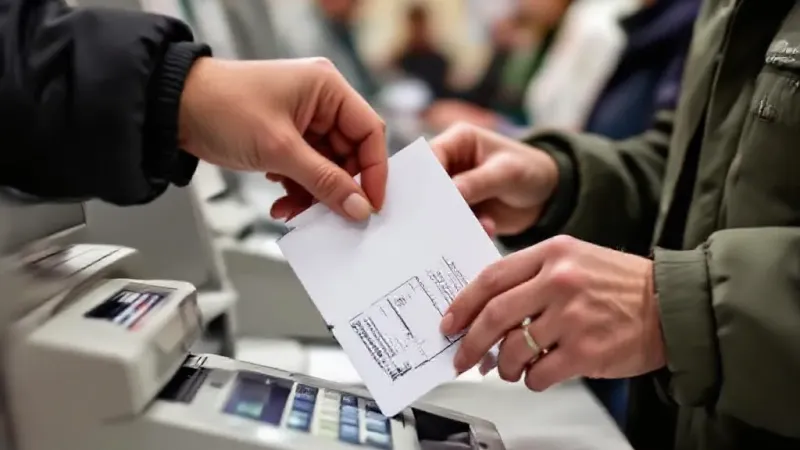
On Thursday, October 1, 2026, the State Election Board held a special meeting where members expressed opposition to a proposed emergency rule. Board member Salleigh Grubbs, a Republican appointee, had introduced the proposal, advocating for changes to how ballots are handled by poll workers to enhance voter privacy. Under her proposed rule, voters would drop their ballots into secure boxes. Poll workers would then empty these boxes, shuffle the ballots to randomize their order, and scan them later. This procedure would replace the current method where voters scan their own ballots directly.
Grubbs's proposal aimed to close a recognized privacy vulnerability in Georgia’s voting system. This flaw, confirmed by voting technology experts, could allow individuals using artificial intelligence to combine public records to link individual voters to their specific ballots. While voter check-in records and ballot images are public documents, state law mandates that the connection between them be severed to protect voter privacy. The issue arises because a seemingly random number on the digital ballot record can be decoded to reconstruct the order in which ballots were scanned. Since voter check-in records are sequential and public, theoretically, these two pieces of information could be combined to identify how a person voted, even though check-in order does not always perfectly correlate with scanning order. Princeton University researcher Max Springer noted in an August university technology blog that this security vulnerability was disclosed in 2022 and that Georgia is among the states that have not applied the software update to resolve it.
Georgia Secretary of State Brad Raffensperger, also a Republican, has already taken measures to address this vulnerability by restricting public access to some relevant data. Ben Adida, executive director of VotingWorks, a manufacturer of election equipment, participated in Thursday's virtual meeting and affirmed that the weakness in Georgia's voting system is "real and serious" and requires attention. However, Adida indicated that Raffensperger's current approach is "technically good enough for now." He also cautioned that attempting to update the voting machine software at this point to improve the randomization feature would pose "a far greater danger of election chaos," comparing it to updating an iPhone operating system right before a crucial meeting, and stating, "In my opinion, it’s far too risky to consider." Adida noted he was not a legal expert.
Grubbs, however, argued that Secretary Raffensperger’s mitigation plan is "frankly illegal" and compromises both constitutional and codified ballot secrecy laws. She also contended that his solution was flawed and could lead to legal challenges regarding the constitutionality of election results. Concerns about the practical implementation of Grubbs's proposal were also voiced. Anne Dover, the election director in Cherokee County, told board members that her department would need to find and train 126 additional poll workers for Election Day and 21 for early voting to implement the shuffle and scan procedure. She highlighted the lack of time and money, noting that her department's training concludes on Friday, October 2, 2026, and many counties have already completed their training. Dover also expressed worries about inadequately trained poll workers mishandling ballots and potential voter suspicion if they were not allowed to scan their own ballots. "I don’t want y’all to set us up for failure by putting this on us so last minute," Dover stated.
Board members Janelle King and Carolyn Roddy, both Republican appointees, also stated their opposition to Grubbs's measure, with Roddy remarking, "I’m not in favor of putting election officials through the wringer." State Representative Victor Anderson, a Republican from Cornelia and co-chairman of a joint House-Senate committee tasked with selecting standards for a replacement voting system, sent an email to Grubbs before the meeting advising against her emergency rule. Anderson questioned the State Election Board’s authority to enact such extensive changes to voting procedures, noting that while the proposal would still use scanners, it "substantially changes the process by which in-person ballots reach those scanners." The contract for the current voting system is set to expire soon.
Marilyn Marks, a voter activist and executive director of the Coalition for Good Governance, who collaborated with Grubbs on the proposed rule, warned board members that failing to pass it could invite "post-election challenges." She questioned whether the board would "do what’s easy and convenient and doesn’t cause too much of a burden, or are we going to do what’s legal?" Marks emphasized that while staying the course might seem easy now, "It’s not going to be so easy when we start seeing threats to seize the machines that are creating this problem or seeing post-election challenges. Those will get really messy, and it will not be so easy." Marks expressed concerns that the inaction of some board members was intentional.