
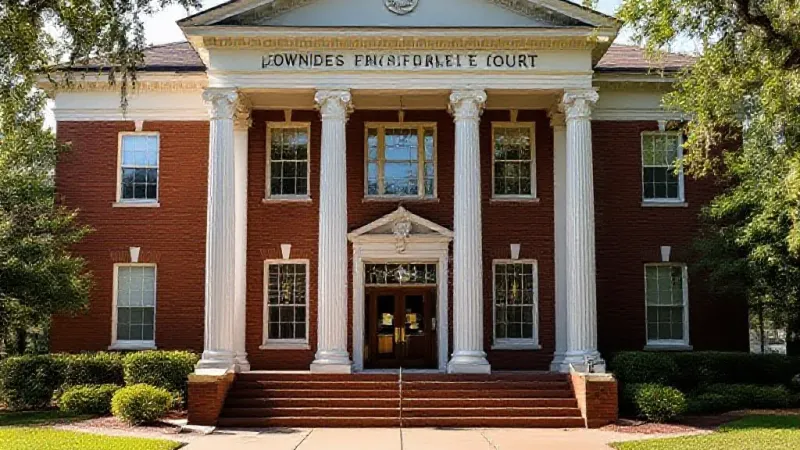
Valdosta residents and all Georgians will cast a ballot this November on a measure that proposes to make all state probate judges elected through nonpartisan races. This ballot question would impact the judges responsible for overseeing crucial legal matters such as wills, estates, and conservatorships. The proposal has garnered backing from a diverse group of over 60 Georgia leaders, spanning both Democratic and Republican political affiliations. This includes figures such as former Democratic Gov. Roy Barnes and former Republican Gov. Nathan Deal, alongside various mayors, county commissioners, and religious and civic leaders, all of whom publicly support the change.
Proponents articulated their case in an open letter, arguing that the measure would strengthen public confidence in the judiciary by emphasizing neutrality, fairness, and independence. They stated that judges should answer "to the law and the Constitution — not to partisan political pressure.” These leaders believe this change would strengthen trust in public institutions. The measure demonstrated significant legislative support, passing unanimously in the state Senate and by a vote of 147-20 in the state House. The limited number of dissenting votes came from members of both major parties.
Some current probate judges concur with the sentiment that their role is to impartially administer laws related to document disputes, rather than engaging with broader social issues. They indicate that being openly associated with a political party can place them in awkward positions and lead individuals from opposing political viewpoints to question the fairness of their judicial rulings. Chief Justice Nels Peterson has also advocated for making judicial races nonpartisan. In a speech before a joint session of the General Assembly in February, he underscored the need for judges to not only be impartial but also to be perceived as such, stating that requiring public and formal party alignment "can only undermine the public’s perception of the judiciary as impartial."
However, not all leaders agree with the proposed change. Woodstock Republican state Rep. Charlice Byrd, one of the House members who voted against the measure, expressed concerns that removing party labels from races could reduce the amount of information available to voters, potentially resulting in less informed electoral outcomes. Byrd articulated her view, stating she believes "that we need to know as individuals where you stand on issues." She further suggested that if the counties currently holding partisan probate judge elections wish to transition to nonpartisan races, they should pursue local legislation to achieve that aim, mirroring actions taken by other counties.
Currently, the vast majority of Georgia’s approximately 1,600 judges are elected in nonpartisan contests. This includes justices on the state Supreme Court. The exceptions are 53 of Georgia’s 159 county probate judges who still appear on the ballot under a Republican or Democratic ticket. The majority of counties have already moved to nonpartisan probate judge races through their own local legislation, demonstrating a precedent for such changes. Last July, a law mandating nonpartisan elections for magistrate judges — who handle issues like warrants, small civil claims, and preliminary hearings — also came into effect.
The question of political neutrality in the judiciary has surfaced in other contexts, even in currently nonpartisan elections. For instance, in 2024, the Judicial Qualifications Commission issued a letter chastising attorney John Barrow for pledging to protect abortion rights during his unsuccessful bid for the Supreme Court. The commission argued that his statements violated rules of impartiality. Earlier this year, the same panel determined that two candidates for the Supreme Court, former state Sen. Jen Jordan and attorney Miracle Rankin, both aligned with the Democratic Party, violated Georgia’s Code of Judicial Conduct. This determination came after they endorsed each other and publicly stated intentions to restore abortion rights in the state. Of the state's nine Supreme Court justices, all but one were appointed by Republican governors.
While discussions surrounding the ballot question continue, the association responsible for lobbying for county governments at the state Capitol has adopted a neutral stance on the measure. For candidates in "downballot" races, such as judicial positions, party affiliation can sometimes be advantageous in counties where one party is dominant, particularly when detailed information about the individual candidates is limited. However, the advocates for the nonpartisan measure contend that a judge’s role requires a detachment from partisan politics. A separate measure, which makes district attorneys nonpartisan in only five Democratic-leaning counties in metro Atlanta, was signed into law earlier this year but is presently being challenged in court.