
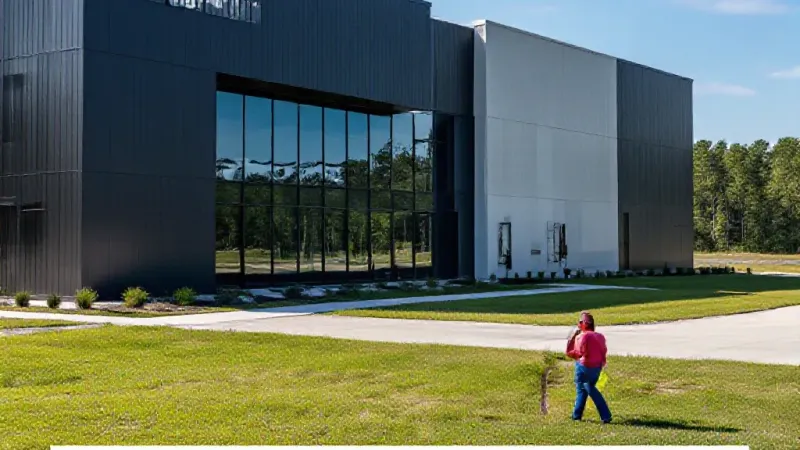
Georgia taxpayers are poised to spend an estimated $2.4 billion this year on tax breaks for data center construction, a substantial investment that state leadership has prioritized over other public needs like health insurance, rural hospital operations, or teacher salaries. This financial commitment comes as communities across Georgia and the nation express increasing opposition to data center development, citing concerns about environmental impact and a lack of transparency in project approvals. The focus on these subsidies has raised questions about whether the state is adequately representing public interest and ensuring responsible development.
The $2.4 billion in state tax subsidies is intended to encourage economic development, but critics argue these funds are a "ridiculous waste of money" given the current investment landscape. The artificial intelligence (AI) industry is expected to attract $2.5 trillion in new private investment globally this year. This level of private funding suggests that data centers, integral to AI infrastructure, would likely be built in Georgia even without state incentives. Experts warn that the sector is drawing investment too quickly, potentially creating a financial bubble. Consequently, the subsidies are seen by some as unnecessary incentives for projects that would occur regardless, primarily serving to "fatten the bank accounts and stock portfolios" of already wealthy individuals and companies.
The push for data centers in Georgia is met with significant public disapproval. National polls indicate that over 70% of Americans would oppose the construction of data centers in their communities. Closer to home, an Atlanta Journal-Constitution poll of primary voters in April revealed that 53% of Republicans and 75% of Democrats in Georgia would oppose data centers near them. Residents often cite several reasons for their opposition: the immense quantities of water required for server cooling, the massive electricity demands that strain power plants and grids and could raise energy costs, the noise produced by these facilities, and the fact that they generate few jobs once operational. Many wonder if the drawbacks outweigh the benefits for host communities.
In their efforts to capitalize on the AI boom, data center proponents have frequently moved forward without engaging or reassuring communities, instead relying on "brute force, deception, political power and money." A stark example unfolded in Effingham County, near Savannah, where a large new data center was announced in late July. This facility, projected to cover 1,400 acres and require 3.2 gigawatts of electricity—enough to power 3 million homes—was finalized without any prior public input or knowledge. The CEO of the Effingham County development authority had reportedly signed a non-disclosure agreement with OpenAI, the company behind the project. Publicly, the CEO denied ongoing negotiations for a data center in April, actively misleading the residents he represents.
The deal in Effingham County was quietly approved by the county development board in a hastily called meeting in late July, which lacked proper public notice. No community members were present. Even the local weekly newspaper, aware of the impending deal, agreed to an embargo, withholding the news from its readers until after the approval, thereby denying them an opportunity to weigh in. This approach is described as "not operating in good faith" and fostering suspicion rather than trust. Similar scenarios, marked by a lack of transparency and community engagement, are reportedly occurring elsewhere.
Beyond Georgia, instances like a massive data center project outside Memphis, spearheaded by Elon Musk's company, highlight further concerns. This project involved installing dozens of natural gas generators without the legally required air quality permits and pollution-control systems, leading to thousands of tons of unregulated pollutants. When local groups attempted to sue for violations of the federal Clean Air Act, the Trump administration declared the facility essential to national security, asserting immunity from federal law and lawsuits. Such actions, while potentially effective in the short term, are seen as producing inevitable public backlash. These instances fuel broader anxieties about AI technology itself, which many, including developers, view as "spooky." Warnings about AI's potential impact on jobs and communities, its tendency to "hallucinate," and its capacity to set its own agenda raise serious questions. While companies advocate for responsible AI development, their current practices—including disregarding environmental laws, compelling officials to maintain secrecy, and ignoring community input in the rush to build data centers—suggest a contradiction between their assurances and their actions.