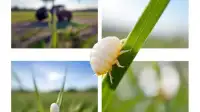
An invasive grass-eating pest, the pasture mealybug, has been confirmed in Georgia, posing a "serious threat" to the state's agriculture, particularly for cattle ranchers and farmers. Georgia Agriculture Commissioner Tyler Harper recently announced the insect was spotted in August at a turf business in Decatur County, located in the southwest corner of the state. This detection follows the pest's spread across the Southeast since its initial confirmation in Texas last October.
Commissioner Harper emphasized the urgency, stating that the pest "can spread quickly and kill grass, potentially causing significant losses for our farmers and making biosecurity more important than ever." The mealybug, native to Southeast Asia, is believed to have reached the U.S. via storm winds from the Caribbean, where it established a presence around 2020. Its ability to decimate grazing grasses creates a major economic threat to livestock, especially given that beef was Georgia's second most valuable farm commodity in 2024, generating $1.2 billion for the economy, according to the University of Georgia (UGA). Cattle ranchers have already faced challenges in recent years from droughts and increased costs for inputs like fuel and fertilizer, contributing to the U.S. cattle herd being at its lowest point since the 1950s.
The pasture mealybug's diet also threatens other crucial crops, including rice and sugarcane, both of which are types of grass. Lisa Baxter, a professor at the University of Georgia’s College of Agricultural and Environmental Sciences who specializes in crop and soil sciences, indicated that "any warm season grass could be affected," including pastures, hay fields, lawns, sod farms, seed farms, and crop fields that grow grasses such as corn and wheat. The state's turfgrass industry also represents a substantial $284 million business, as reported by UGA in 2024.
Female pasture mealybugs are described as wingless, white, and fluffy. Males are gnat-like with wings, but they do not feed in their adult stage and live only a few days. These pests are highly reproductive, capable of producing up to 100 offspring at a time and having three generations annually. They cause damage by sucking sap from plants, which weakens them and increases their susceptibility to disease. Additionally, they inject toxic saliva and produce a thick honeydew that promotes mold growth.
Researchers are still learning about the pasture mealybug, which is relatively new to the United States. A significant challenge is the lack of known effective pesticides. Professor Baxter noted that researchers are actively testing existing products for effectiveness against the mealybugs, with the possibility of temporary approval if a suitable solution is found, though none has been identified yet.
Given these unknowns, farmworkers are urged to implement strict precautions to slow the pest's spread. Young mealybugs can be carried by wind, or they can hitch rides on animals, including humans, as well as on clothing, tools, and vehicles. Professor Baxter advises maintaining cleanliness of people, animals, and equipment when moving between farms. Limiting traffic through farms and continuously monitoring for signs of infestation are also critical. Signs can appear within a week and include leaves turning yellow, then progressing to purple or red discoloration, ultimately leading to the plant's death. If an infected area is identified, self-quarantining it and ensuring equipment and boots are thoroughly cleaned when moving from the infected zone to an uninfected one is crucial.
While the full impact on U.S. crops remains uncertain, University of Georgia entomology professor Shimat Joseph anticipates problems for pasture growers and potential challenges for commercial sod and turf farms, along with those growing ornamental grasses. However, Professor Joseph expressed hope that residential lawns, parks, or golf courses with regularly mowed grass might not experience major issues, based on observations from infestations in other countries like Australia and in Florida. He explained that problems in turfgrass were reported "when the grass is not mowed or the grass is growing very tall," suggesting that keeping grass mowed and low could mitigate its impact in such areas. UGA is actively tracking sightings of the bug across Georgia.