
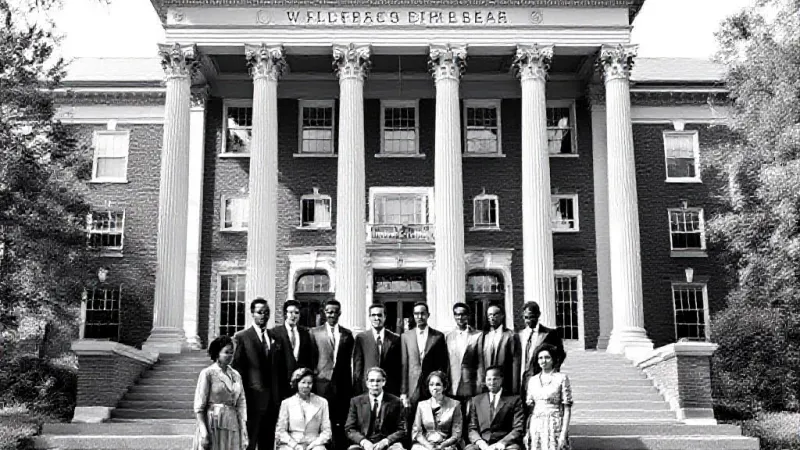
Valdosta, GA – Lowndes County residents are invited to reflect on a significant chapter in local educational history as details from the Georgia State Womans College (GSWC) Silver Anniversary in 1938 come to light. This momentous celebration marked twenty-five years since the college first opened its doors in 1913, establishing a quarter-century of dedicated education for women in South Georgia.
Information and a historical photo related to this event have been provided for publication by the Lowndes County Historical Society & Museum, originating from the Valdosta State University Archives & Special Collections. This collaborative effort brings an important local milestone to the community’s attention, detailing the esteemed guests and influential figures who shaped the institution during its formative years.
The 1938 Silver Anniversary was a notable occasion that attracted prominent leaders from across the state to Valdosta. Among the distinguished attendees were Chancellor Samford and Governor E.D. Rivers. Governor Rivers' presence underscored the college's broader relevance, as he was recognized for his role in helping to usher President Franklin D. Roosevelt’s New Deal programs to the state. His participation at the celebration highlights the significant state-level recognition and political connections that Georgia State Womans College held at the time of its 25th anniversary, connecting the institution's growth to wider regional and national developments.
At the helm of the institution during this landmark period was GSWC President Dr. Frank R. Reade. During the anniversary festivities, Dr. Reade extended a welcome to the college's first president, Dr. R.H. Powell, honoring the institution's foundational leadership. This gesture not only celebrated the college’s origins but also emphasized the continuity of its mission and the respect for its early guiding principles. The acknowledgment of the college's past leadership, alongside its current administration, was a central theme of the anniversary celebration, connecting generations of educational leaders.
Throughout the era of the Silver Anniversary, Georgia State Womans College was supported by a dedicated group of administrators and faculty members who significantly contributed to its academic and community life. Annie P. Hopper served in the crucial position of Dean of Women, overseeing student welfare and campus living, a role vital to the college's residential and educational environment. The institution’s commitment to academic excellence was further upheld by educators such as Gertrude Gilmer Odum, who taught English, enriching students' literary and communication skills. In the realm of science, Dr. Beatrice Nevins provided essential instruction in biology. Additionally, Dr. Marian E. Farbar performed a dual function for the college community, serving as the resident physician while also contributing to the academic curriculum by teaching biology. These individuals exemplify the diverse expertise and commitment that fostered a robust educational environment at GSWC during its initial decades.
The historical details from this significant anniversary are preserved and made accessible through the diligent work of the Valdosta State University Archives & Special Collections. This institution acts as a vital repository for local history, maintaining records and photographs that narrate the story of Valdosta and its surrounding areas. The Lowndes County Historical Society & Museum, which facilitated the publication of this information, plays an active role in sharing these insights with the public. The museum, located in Valdosta, is open free to the public, offering access to local history and exhibits Tuesday through Thursday from 11 a.m. to 4 p.m. This ongoing commitment ensures that the rich past of educational institutions like the Georgia State Womans College remains accessible and relevant to current and future residents of Valdosta and Lowndes County. The Silver Anniversary of GSWC in 1938 stands as a testament to its enduring legacy and its profound impact on the region's educational landscape.