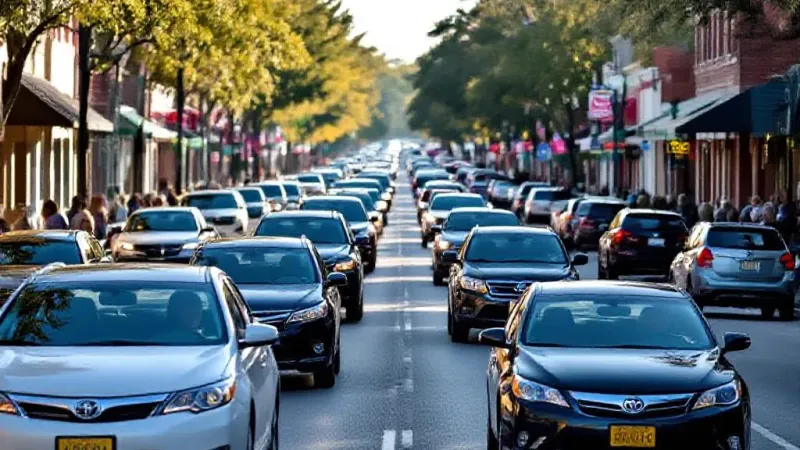
A recent afternoon saw a Valdosta resident, Dean Poling, experiencing a significant delay due to a stopped train on Gornto Road, an incident that underscored the complex and cumulative challenges currently facing the city. Poling, a former editor of The Valdosta Daily Times, observed two to three dozen cars halted for an estimated 10 to 15 minutes, prompting individuals to call doctor's offices to report tardiness. This particular delay occurred with a hurricane threat looming over the afternoon, adding to a pervasive sense of ongoing struggle in the area.
Drivers attempting to reroute by making tight U-turns or turning onto side roads found limited viable options. Poling noted that the Jerry Jones stretch was already blocked for expansion work, and the same stopped train was likely also obstructing Baytree, further constraining cross-town movement. The wait at the railroad crossing continued as the train remained stationary, affecting commuters' ability to traverse the city.
This specific traffic snarl is part of a broader pattern of disruption in Valdosta. The city has experienced considerable disarray following Hurricane Helene, which impacted the region more than two years prior. Helene caused extensive damage, downing so many tall trees that it visibly changed Valdosta's skyline. These trees fell on houses and buildings, crisscrossed yards and forests, smashed through roofs, and were tossed across roads, tearing up the land by their roots. For weeks after Helene, walls of downed trees barricaded the sides of roads, necessitating widespread traffic diversions for cleanup operations. While rebuilding efforts have been underway, tangible signs of Helene, such as rooftop blue tarps, are still visible on structures more than two years later. Poling characterized Helene as a catastrophe, noting that everyone involved responded admirably to its immediate aftermath.
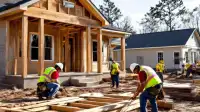
Even before cleanup from Helene fully concluded, extensive road work commenced across Valdosta, described as constant and ubiquitous. These projects have involved downing more trees, clearing additional land, and blocking more streets, leading to further traffic impediments. The ongoing road construction initiatives include the installation of roundabouts, four-laning expansions, repaving efforts, and corner curbing. While these efforts are recognized as signs of progress and hope, intended to facilitate smoother cross-town travel in the future, they currently contribute to significant delays and a pervasive feeling of endless disruption. Poling noted that these major road projects were scheduled prior to Hurricane Helene, with the explicit expectation that they would ultimately ease traffic congestion.
Adding to the current pressures, another late-season hurricane was actively churning and swirling in the Gulf on the day Poling observed the train delay. The combination of lingering recovery from a past catastrophic hurricane, extensive and constant ongoing road construction, and the immediate threat of a new storm creates a challenging operational environment for Valdosta residents. Despite the difficulties, Poling reflected on a shared need to persevere, expressing hope that the work would eventually be finished and the train would eventually move, anticipating a better city for the future. This sentiment underscores a community striving to navigate current hardships toward future improvements and stability.