
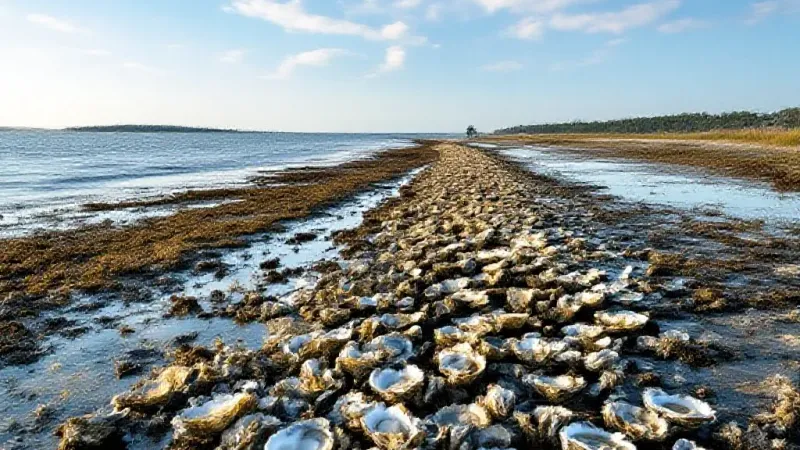
Georgia residents and visitors seeking local wild oysters will need to wait longer than usual this fall. The annual closure of the wild oyster harvest season, typically ending on September 30, has been extended by state officials due to unusually warm ocean temperatures along the Georgia coast. This decision means the harvest will remain closed until water conditions are deemed safe for wild oysters, according to the Georgia Department of Natural Resources. The extension aims to protect public safety, as warm waters can promote the growth of dangerous bacteria in oysters.
It is well-known in coastal regions that consuming raw oysters in warmer months carries risks because higher water temperatures allow harmful bacteria to thrive. To mitigate these risks, Georgia implements a standard annual shutdown of wild oyster harvesting from June through September. However, this year marks only the second time the state has prolonged this closure, with the previous instance occurring in 2018 when the harvest was extended for several weeks until ocean temperatures dropped, as stated by Dominic Guadagnoli, who manages the Georgia Department of Natural Resources shellfish and water quality program.
Guadagnoli attributed the persistent warmth to an exceptionally warm summer combined with an absence of significant weather events. He noted that significant storms, including tropical systems, typically help to reduce water temperatures, a factor that has not contributed to temperature reduction this season.
A significant development since the 2018 extension is the implementation of a formal system for oyster farming and harvesting in Georgia. This new framework means that the current restrictions apply exclusively to wild oysters. Farmed oysters, cultivated using floating gear, operate under controlled conditions that allow them to be safely harvested and consumed even during the traditional closure period.
Laura Solomon, owner of Tybee Oyster Company, elaborated on the safety measures for farmed oysters. She explained that "our oysters have to stay submerged for two weeks before we harvest them." This continuous submersion ensures they are always filtering and remain in the shade of their floats, preventing them from sitting exposed directly to the sun. Tybee Oyster Company is one of only three firms in the state currently permitted to harvest oysters during this closure period under the new regulations.
Officials from the Georgia Department of Natural Resources are actively monitoring ocean temperatures. The wild oyster harvest will be reopened as soon as conditions are safe for consumption, Guadagnoli confirmed.