
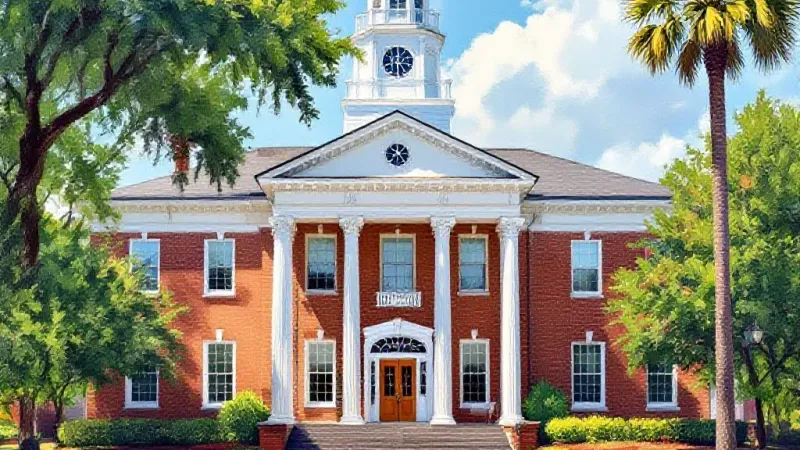
Residents in Lowndes County recently filed a lawsuit against the county following the Lowndes County Commission's 3-2 vote last week to approve the Red Clay data center. This local opposition mirrors a growing national pushback against the construction of large data centers, prompting America's major technology companies to re-evaluate their strategies in host communities.
Faced with increasing skepticism and community resistance, particularly in the lead-up to midterm elections, companies like Google, Meta, Amazon, and Microsoft are promising to take fewer taxpayer handouts, reduce secrecy, and provide more financial benefits to areas willing to host their server warehouses. The industry's shift comes as community opposition, including local permit blocks, has become a significant hurdle for these projects across the U.S.
Officials from Google and Meta have indicated a move toward greater transparency. Devi Thomas, Google’s global head of community development and engagement, told The Associated Press that "early public consultation is increasingly a very important part of the process." Similarly, Lindsay Elin, Meta’s vice president of public policy and external affairs, stated to The Associated Press that Meta is reviewing its use of non-disclosure agreements (NDAs) as part of evaluating how it shares information with communities. Historically, the use of NDAs and code names for projects has meant that host communities often knew little about a project until it appeared on a municipal board's agenda, critics and developers say.
Beyond transparency, companies are also ramping up financial commitments. Amazon recently introduced its “Amazon Data Center Commitment,” which includes pledges to improve the environmental rating of its backup diesel generators and disclose more about its energy and water use. Amazon, Microsoft, and Google have also stated they have stopped requiring government officials to sign NDAs. Meta and Amazon recently announced plans to each spend $1 billion on financial incentives for host communities in the coming years, in addition to existing support for schools, charities, and job training. Google projects its investments in local programs will reach $1 billion by the end of 2027. Microsoft has also indicated it will forego certain local tax breaks, and Google committed to paying full real property taxes on the buildings and land for all its new data center campuses.
Despite these new commitments, some critics remain skeptical. Sam Burleigh, who helped establish Concerned Citizens of Montour County, described the companies' pledges as "propaganda," suggesting they are a reaction to unforeseen resistance. Kathryn Hoffman, executive director of the Minnesota Center for Environmental Advocacy, noted an increase in Google's public relations outreach but observed no corresponding increase in disclosure of critical project details.
The political landscape also highlights the challenge. A report this month by several Senate Democrats criticized data center giants for aggressively seeking state and local tax breaks and not fully covering the costs of the electric-grid buildout required for their energy-intensive facilities. Senate Republicans, in an August 18 memo, warned the tech sector to address the "toxic brand" of the industry by clarifying who benefits and who pays. Developers like Drew Nations in North Carolina have also urged companies to address quality-of-life complaints, such as noise and visual impact, and to forego "corporate welfare" like lucrative sales tax exemptions.
The demand for data centers began driving up electric bills last year across a 13-state electricity grid, leading to public outcry and promises from tech giants to cover power infrastructure costs. The Data Center Coalition, a trade association, has spent over $10 million on pro-data center ads in 10 states. Despite this, local opposition persists, with residents continuing to pressure municipal boards and an increasing number of municipalities passing data center moratoriums. Balaji Tammabattula, chief operating officer of BaRupOn, a data center campus developer, acknowledged that the pressure has underscored how crucial community support is, stating, "It’s impossible to build without them."