
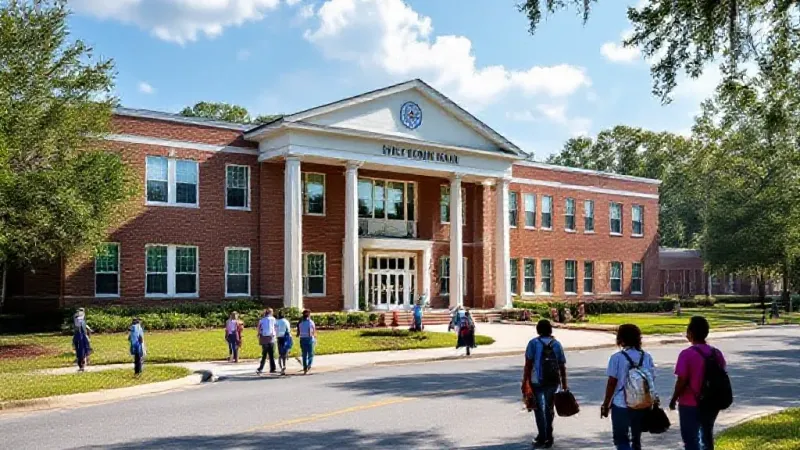
The opening of the College Street Elementary School, located at 1605 Azalea Drive, in 1963 marked a significant moment for Valdosta's educational landscape. This facility, which is now recognized as the Old S.L. Mason Elementary School and VECA, began operations in a year that saw critical decisions unfold regarding both school funding and racial policy in the city. The information detailing these events comes courtesy of the Valdosta Daily Times, offering a glimpse into the community's priorities and challenges during that era.
In 1963, concurrent with the school's opening, Valdosta voters participated in a special referendum that directly impacted the financial future of the city's schools. Residents approved a measure to increase school taxes, raising the millage rate from 10 to 14 mills. This decision by the electorate reflected a community-wide commitment to supporting its educational infrastructure. According to reports from the Valdosta Daily Times, the referendum saw substantial support, with 1,646 citizens voting in favor of the tax increase. A smaller contingent of 352 voters cast ballots against the new tax, demonstrating a clear majority for the measure. The four-mill increase was projected to yield an additional $140,000 annually for the school system, a considerable sum at the time. The allocation of these new funds was carefully planned: two mills were designated for immediate use in the current tax year to establish and support a trade school, a move indicative of a focus on vocational education. The remaining two mills were slated for the subsequent year, intended to address a pre-existing $60,000 deficit within the school system and to cover essential ongoing building maintenance costs across various facilities. This strategic funding approach aimed to bolster both new educational programs and the upkeep of existing assets.
However, 1963 also highlighted a period of tension and transition concerning civil rights within the Valdosta City Schools system. The Valdosta City Schools Board of Education (VCS BOE) maintained a firm public stance in opposition to racial integration during that year. This policy decision had direct and measurable financial consequences for the local education system. The Valdosta Daily Times reported that due to its opposition to integration, the VCS BOE consequently lost $50,000 in annual federal funding. This loss represented a significant reduction in resources for the city schools, underscoring the broader national pressures and changes taking place during the civil rights movement. It was not until May 21, 1965, nearly two years after the College Street Elementary School opened and the tax referendum passed, that the city schools officially approved racial integration. This later approval marked a turning point for the system, aligning its policies with federal mandates and societal shifts.
The confluence of these events in 1963—the inauguration of a new educational facility, the community’s decision to increase taxes for school development and maintenance, and the Valdosta City Schools Board of Education’s initial resistance to racial integration and the subsequent financial penalties—paints a complex picture of Valdosta during a transformative period in American history. These local actions and decisions, as documented by the Valdosta Daily Times, shaped the educational opportunities and experiences for residents for years to come.