
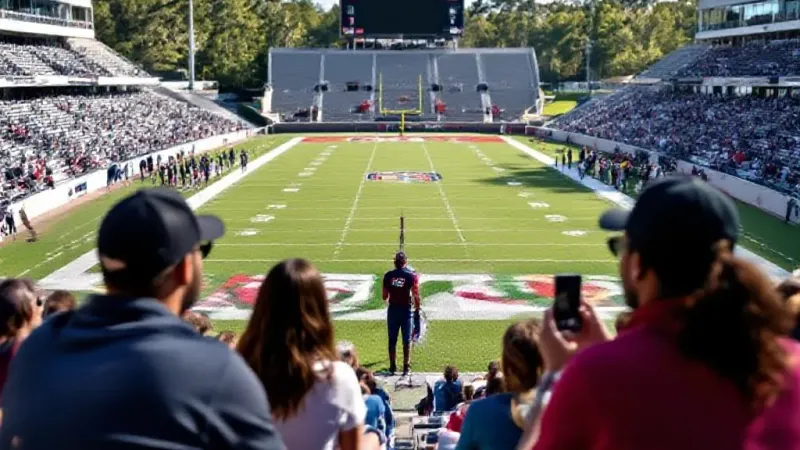
Valdosta State University will depart the Gulf South Conference, its home for 45 years, to join the Peach Belt Conference for 11 sports, with its football program becoming a Division II independent. The change, announced last Friday, will take effect on July 1, 2027, marking a new era for Blazers athletics. The move is expected to yield significant financial savings and enhance the student-athlete experience, according to university officials.
Peach Belt Conference Commissioner Diana Kling confirmed that serious conversations between the PBC and VSU Director of Athletics Troy Katen began at the start of this year. Kling noted the broad support from PBC presidents and chancellors, stating their excitement for the opportunity. She highlighted the regional advantages and VSU's consistent competitive success and academic commitment as key factors, calling the decision "a natural fit" and "probably the quickest vote in history."
One of the primary drivers for VSU's conference shift is the promise of reduced travel expenses. Last season, for instance, the VSU men’s basketball team traveled approximately 10,482 miles in Gulf South Conference play, including trips to Embry-Riddle and Alabama-Huntsville. Valdosta State is currently the only remaining GSC member school from Georgia, contributing to substantial travel and hotel costs for its athletic programs. The Peach Belt Conference, in contrast, boasts seven schools in Georgia alone, alongside one in Florida and three in South Carolina.
VSU Director of Athletics Troy Katen emphasized the financial benefits, stating, "there’s financial implications with it." He expressed excitement, noting that college athletics economics "isn’t changing; it’s going up." He explained that the move allows for "condensed or reduced overnight trips," with many becoming day trips. This change is particularly beneficial for student-athletes, enabling them to return to classes more regularly. The reduction in hotel, meal, and travel costs will allow programs to reallocate funds for additional scholarships or to otherwise enhance their programs.
The future direction of VSU football was a significant consideration prior to last Friday’s announcement. The Gulf South Conference has seen a notable decline in its football membership. In 2018, when the Blazers secured their fourth Division II national championship, the GSC had nine teams. By 2024, it maintained eight. Last season, the conference was halved, with North Greenville, Chowan, Mississippi Christian (formerly Mississippi College), and Erskine departing. Following the 2025 season, West Florida will move to Division I, leaving the GSC with only VSU, West Alabama, and Delta State. Katen stated that the changes in the GSC were "a big factor," particularly the loss of the automatic qualifier into the NCAA Division II playoffs, which places greater importance on strength of schedule for at-large bids.
With VSU football becoming a Division II independent for the 2027 season, Katen acknowledged the new challenge. He remarked that as an independent, VSU will effectively be "playing playoff football every week." This independence necessitates more travel for football, raising questions about how to support the program while ensuring benefits for other student-athletes across the department. Katen is actively collaborating with the remaining GSC football institutions to explore scheduling affiliations and partnerships for 2027 and beyond. The Blazers’ national prominence, while a positive, also presents a hurdle, as many teams are reluctant to play them, though VSU does receive numerous invitations to play Division I schools. The primary goal for independent football is to meet the minimum number of games required for playoff consideration.
For years, fans and supporters have voiced hopes for VSU to transition to Division I, especially as former conference rivals like North Alabama, West Georgia, and West Florida have made the move. Katen confirmed that VSU had conversations with a number of different Division I schools and conferences. However, the decision ultimately centered on the benefit for student-athletes, coaches, and staff, and whether such a financial move would be prudent. Katen reiterated VSU's commitment to competitive success, believing there is "still room to grow as a Division II institution." He added that the current move allows other programs to gain more funding and resources, and that the Peach Belt offers strong national and regional opportunities for postseason play. Looking ahead, Katen anticipates "changes environmentally in the football landscape" in the next three to eight years.