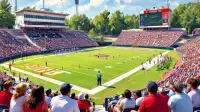

Joe Wilson, known affectionately as 'the Silver-Haired Fox,' is remembered for his pivotal role in transforming the Lowndes County High School football program during his tenure as head coach from 1976 to 1988. Wilson’s leadership marked a significant era for the Vikings, culminating in the school's first-ever State Championship in 1980. His enduring impact on Lowndes County football is honored by the naming of Martin Stadium’s field in his name.
During his twelve seasons at the helm, Coach Wilson compiled an impressive 95-49 record, establishing a new standard for the program. His teams secured two regional championships, building momentum towards the ultimate prize. The pinnacle of his coaching career with the Vikings arrived in 1980, a year that saw Lowndes County High School capture the coveted State Championship for the first time in its history. This landmark victory was a celebrated event, with 12,000 fans gathering to watch the Lowndes Vikings lift the trophy. The achievement cemented Wilson's status as a legendary figure in South Georgia sports.
Wilson's deep understanding of local football rivalries was well-known. Originally from Pinehurst, Georgia, he had previously served as the offensive coordinator under legendary Valdosta High School’s Coach Nick Hyder. This background gave him unique insight into the competitive landscape of the region. His fierce dedication to the Lowndes program and the community was famously articulated during a Lowndes Touchdown Club meeting. When asked whether he would prefer to win a state championship or beat rival Valdosta, Coach Wilson’s candid reply underscored the intensity of the Winnersville rivalry. He famously stated he would 'rather beat Valdosta than win a national championship,' reflecting his focus on local pride and the community he served.
The transformation Wilson brought to Lowndes County High School football extended beyond wins and championships; it forged a winning tradition and an identity for the program. His strategic vision and leadership created a foundation that influenced subsequent generations of Vikings football. The decision to name Martin Stadium’s field in his honor serves as a perpetual reminder of his contributions and the indelible mark he left on student-athletes and the entire Lowndes County area. His legacy continues to be a source of pride for residents, former players, and fans, reflecting a period of unparalleled success and community engagement in local high school sports.